
Living with cancer
Good care includes comfort, emotional health, family needs, finances, work, nutrition, movement and the things that give life meaning.
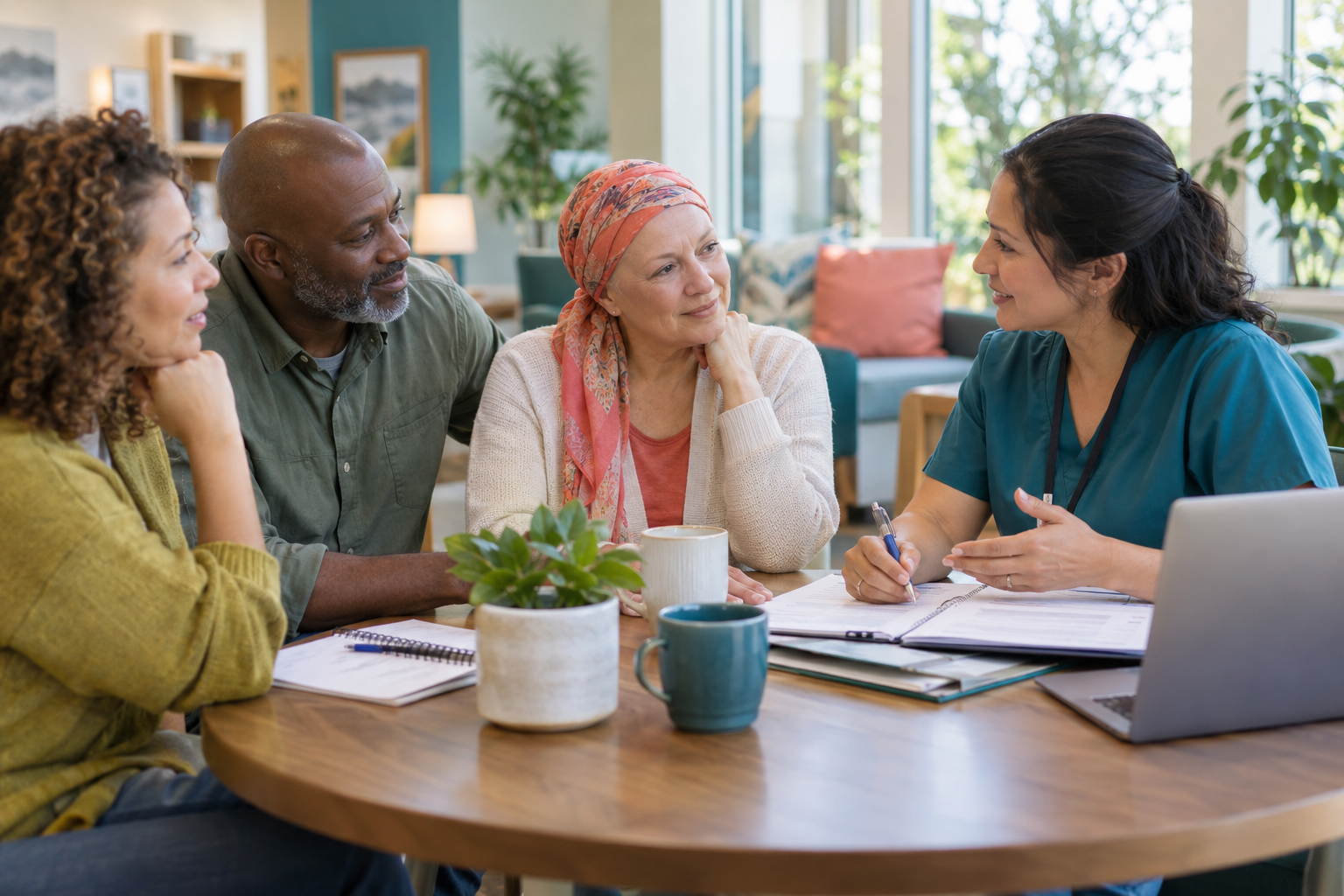
Build a support circle
Consider an oncology social worker, nurse navigator, dietitian, rehabilitation specialist, mental-health professional, spiritual-care provider and trusted family or friends.
Managing symptoms
Track pain, nausea, fatigue, sleep, appetite and other changes. Report them early rather than waiting.
Food and movement
Needs differ during treatment. Ask for individualized guidance; avoid restrictive diets and unproven cures.
Emotional health
Fear, anger, grief and uncertainty are common. Counseling, support groups and medication may help.
Work and finances
Ask about leave, disability accommodations, transportation, insurance navigation and financial assistance.
Sexual health and fertility
Discuss fertility preservation before treatment when possible and ask for help with intimacy concerns.
Caregiving
Share tasks, use respite care and protect the caregiver’s medical and emotional needs too.
After treatment
A survivorship care plan can summarize diagnosis, treatment received, follow-up schedule, possible late effects and healthy-living guidance. Recurrence worries are common; ask how and when follow-up results will be communicated.